




Dr. Ellen Braaten
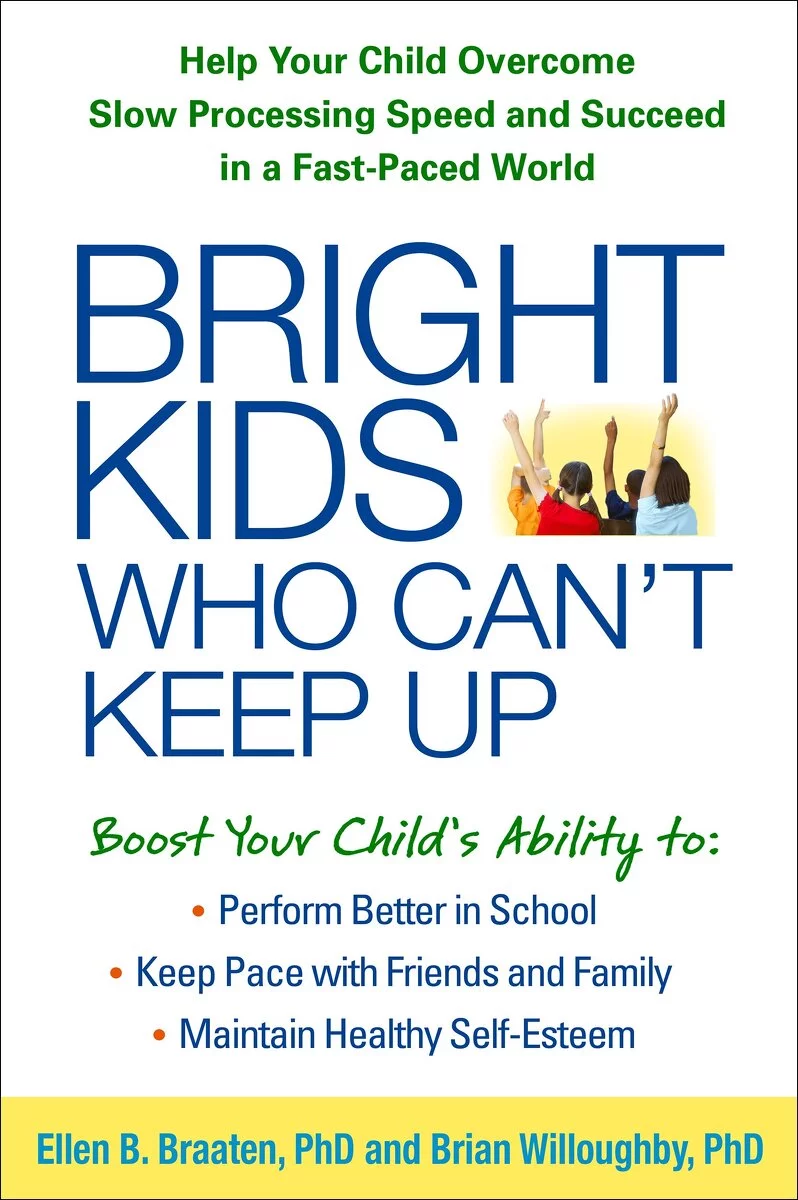
Bright Kids Who Can’t Keep Up: Strategies to Improve Academic Performance and Processing
Virtual Event
Program Takeaways:
Processing speed is about “how fast,” not “how smart.” Many students with slow processing speed are deep thinkers, but struggle with quick, automatic tasks like copying, timed work, or rapid responses.
Slow processing speed shows up across many learners — not just ADHD. It can co-occur with ADHD, autism, anxiety, dyslexia/dysgraphia, and more, but it is not the same thing as any one diagnosis.
The modern world makes slow processing more costly. As life and school have sped up (more demands, tech, packed schedules), even “low average” processing speed can create significant stress and falling-behind feelings.
A predictable cycle can form: slow processing → daily struggles → anxiety/low self-esteem → even slower processing. Emotional strain (worry, perfectionism, hypervigilance) can further reduce efficiency and motivation.
The “3 A’s” are the roadmap: Accept, Accommodate, Advocate. Adults can help most by normalizing the need for more time, preventing embarrassment, building strengths, and teaching students to self-advocate.
To receive detailed program summaries and be notified of upcoming events sign up for the GPS weekly newsletter.
Braaten will provide a compassionate guide to help adults understand the biological, psychological, and social factors that affect school success and motivation. Participants will learn how to best identify their child’s unique strengths, weaknesses, and personality traits to ignite engaged learning.
For students mislabeled as lazy or unmotivated, the struggle may be with an area of cognitive functioning known as “processing speed” – how the brain receives and responds to information. Braaten will highlight targeted supports that can lessen frustration, build confidence and help kids ages 5 to 18 reach their full potential.
By implementing Braaten’s strategies, parents can create a caring environment that helps children thrive in school and at home.
Braaten is executive director of the Learning and Emotional Assessment Program at Massachusetts General Hospital (MGH) and is an Associate Professor of Psychology at Harvard Medical School. Her research and numerous publications focus on ADHD, learning disabilities, intelligence, and assessment. She has published many books for both professionals and parents including “Bright Kids Who Can’t Keep Up,” and “Bright Kids Who Couldn’t Care Less.”
Please share information about this event with friends and relatives. All are welcome to our free weekly GPS events, and no registration is required.
Speaker Resources
Related Events

Thu Aug, 20 2026 @ Programs are streamed at noon and 7pm CST
GPS 2026-27 Events List
New Topics. Real Support. Stronger Families.


Wed Sep, 23 2026 @ Noon and 7pm CST
Blaise Aguirre, MD with Ross Szabo
When Kids Say “I Hate Myself”: How to Respond
Thu Apr, 9 2026 @ Noon and 7pm CST
Janine Halloran
EARLY CHILDHOOD - Coping Skills to Address Anger and Challenging Feelings
