




Jenny Anderson and Dr. Rebecca Winthrop
Checked-Out / Stressed-Out: Moving Kids From Disengagement to Drive
Virtual Event
Program Takeaways:
Engagement is the lever that changes everything. Winthrop emphasized that student engagement strongly shapes outcomes—attendance, achievement, graduation, and even mental health and prosocial behavior.
Parents often underestimate teen disengagement. The speakers highlighted a growing gap between how engaged students say they are and how engaged parents think they are, especially by high school.
Engagement is more than “showing up.” Anderson explained that engagement includes what students do, feel, think, and initiate—and much of it is invisible from the outside.
Four “modes” help adults respond more effectively. Their framework—Passenger, Achiever, Resister, Explorer—gives parents and educators practical language to understand what’s going on and how to help kids shift toward healthier learning.
In an AI world, Explorer Mode matters even more. Winthrop argued that as generative AI automates more school tasks, kids will need curiosity, initiative, and independent thinking—skills that grow when we help them spend more time in Explorer Mode.
To receive detailed program summaries and be notified of upcoming events sign up for the GPS weekly newsletter.
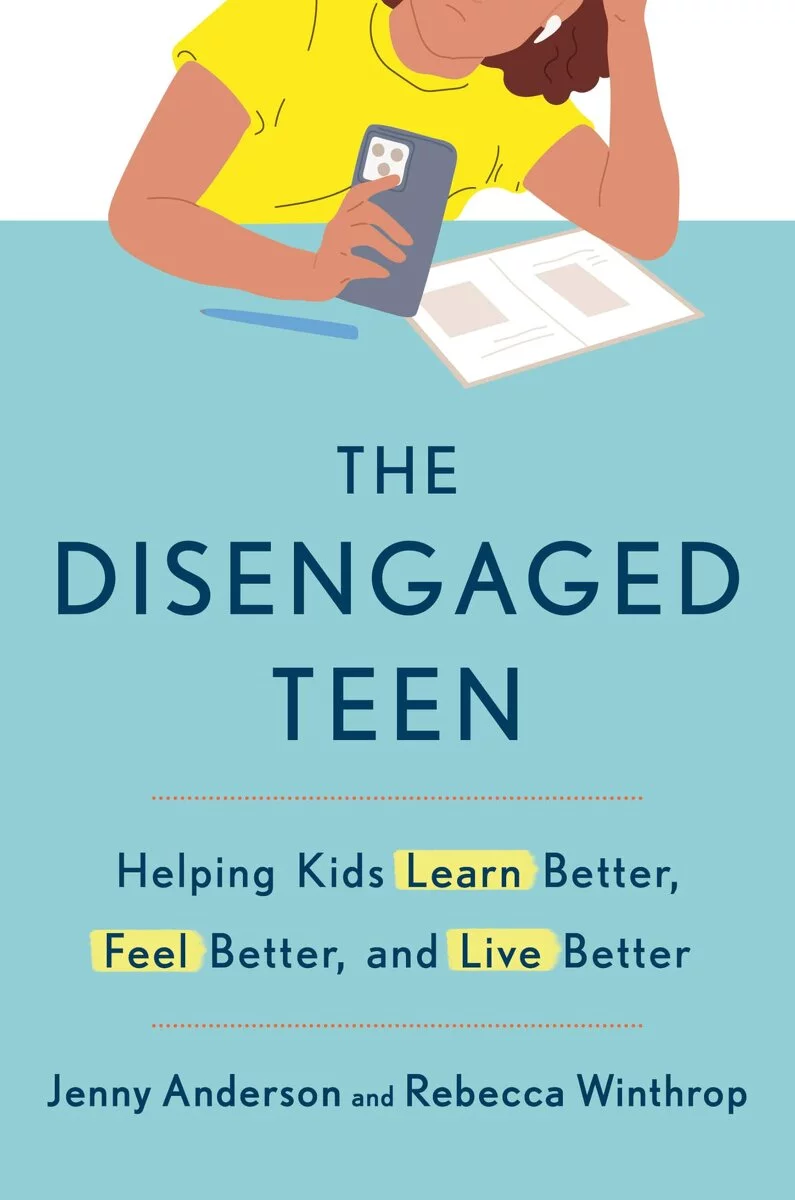
THE DISENGAGED TEEN book empowers parents to become active participants in helping their children learn well by outlining simple yet counterintuitive parenting strategies for connecting with their child, igniting their curiosity, and building self-awareness and emotional regulation.
A shocking majority of teens are disengaged from school, simultaneously bored and overwhelmed. This is feeding an alarming teen mental health crisis. As kids get older and more independent, parents often feel powerless to help. Until now!
For the past five years, award-winning journalist Jenny Anderson and the Brookings Institution’s global education expert Rebecca Winthrop have been investigating why so many children lose their love of learning in adolescence. In their new book “THE DISENGAGED TEEN: Helping Kids Learn Better, Feel Better, and Live Better” they offer a timely and practical guide with evidence-based strategies to turn disengagement to drive, showing how parents can help their children engage better in school and beyond.
Based on extensive original research, THE DISENGAGED TEEN includes digestible advice and real-world stories of children who transformed their relationships with learning.
It identifies four modes of learning that students use to navigate the shifting academic demands and social dynamics of middle and high school. These modes, which shape the internal narratives kids develop about their skills, potential, and identity, include:
Resister: When kids resist, they struggle silently with profound feelings of inadequacy or invisibility, which they communicate by ignoring homework, playing sick, skipping class, or acting out.
Passenger: When kids coast along, they consistently do the bare minimum and complain that classes are pointless. They need help connecting school to their skills, interests, or learning needs
Achiever: When kids show up, do the work, and get consistently high grades, their self-worth can become tied to high performance. Their disengagement is invisible, fueling a fear of failure and putting them at risk of poor mental health. They need help taking on new challenges and encouragement that they matter beyond their achievements.
Explorer: When kids are driven by internal curiosity rather than just external expectations, they investigate the questions they care about and persist to achieve goals. This is the pinnacle where kids become resilient learners and build skills to help them thrive in an AI-dominated world.
Understanding a child’s learning mode is vital for nurturing their ability to become Explorers.
Join GPS for this enlightening conversation and discover a blueprint parents can use to communicate with and connect with their child in a way that’s tailored to the child’s specific needs.
Winthrop is the director of the Center for Universal Education at the Brookings Institution. She and Anderson are the distinguished authors of the “The Disengaged Teen: Helping Kids Learn Better, Feel Better, and Live Better”

In conversation with…
Dr. Winthrop will be in conversation with coauthor and award-winning journalist Jenny Anderson, who spent over a decade at The New York Times before pioneering coverage on the science of learning at Quartz. She contributes to TIME, The New York Times and The Atlantic, among other publications.
Speaker Resources
Related Events

Wed Apr, 8 2026 @ Noon and 7pm CST
Bryana Kappadakunnel
Parent Yourself First: Become The Parent You Want to Be

Thu Sep, 11 2025 @ Noon and 7pm CST
Hunter Clarke-Fields
End Reactive Parenting Habits and Create Peace at Home


Wed Apr, 23 2025 @ noon and 7pm CST
Cara Natterson MD & Vanessa Kroll Bennett
This is So Awkward: Helping Kids Manage Today's T(w)een Culture -- Modern Puberty Explained
